Christmas with The Chosen: A Simple yet Sensational Spiritual Experience

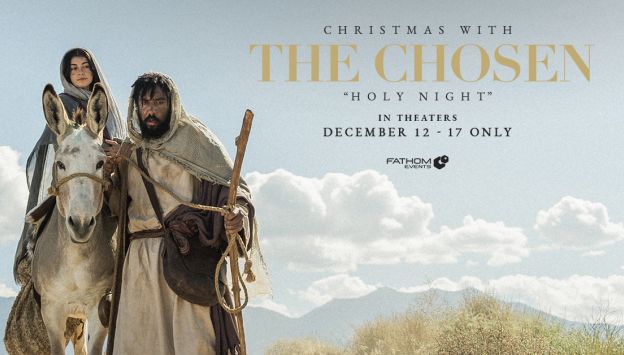
“A young mother labeled impure. A shepherd boy considered ‘unclean.'” This is the summary for the movie event Christmas with The Chosen: Holy Night provided by Fathom Events. I had the privilege of seeing this movie on the big screen this Christmas season. Ever since the nativity of Jesus, there have been over twenty film adaptations (give or take) made to tell their own version of this ancient story. But few of them capture the hope of the season quite like this movie event.

Christmas with The Chosen: Holy Night combines two other movies, The Shepherd (2019) and The Messenger (2021), which were previously made by the same minds behind the popular Biblical drama series The Chosen. The Shepherd , as one can guess based on the title and the summary, tells the story of that famed night through the eyes of one of the shepherd boys. While The Messenger takes viewers on the road to Bethlehem along with Mary and Joseph.

Hurdles and Hope

Both of these movies individually succeed at providing their own separate insights into the story of Jesus’ birth. But together they create a unique story with the overarching theme of hope for those waiting for the Messiah, especially those deemed “unworthy” by society. This is explored through the shepherd boy’s physical deformity. Early in the movie, the shepherd is banned from entering the temple when a cut on his arm begins to bleed excessively. This response is likely based on the grounds of Leviticus 25 which states that those who bleed are considered unclean. Things aren’t much better in his own group as the other shepherds tease him for being slow and force him to bear the brunt of the workload.

This is paralleled by Mary and Joseph’s side of the story. During their journey, Joseph mentions his wife’s “condition” and the uncertainty of her fate when they first heard the news. Since Mary was not yet wed to Joseph, her pregnancy likely sparked rumors among the citizens of Nazareth that she had been unfaithful. In addition to having her name dragged through the mud, she also faced the threat of being stoned to death had it not been for divine intervention. Unfortunately, their troubles didn’t end when they reached Bethlehem. Despite rushing from place to place, none of the inns would take them in. Although it is possible that there were no vacant rooms due to the census, Joseph mentions that they could have been turned away because they didn’t have as much money as the other travelers. Considering how people from lower socioeconomic classes have been treated throughout history, this is a reasonable assumption.

Even in the midst of their trials, the narrative still delivers a sense of hope, emphasized by the performances given by the actors. While, Joseph laments the direness of their situation to his wife, she offers him a smile and says “We’ll make it work.” It’s apparent that Mary trusts that things will turn out well in spite of their unusual circumstances. After a long journey and hours of pain, her patience is rewarded with a child who will grow up to be the Messiah.

The shepherd boy’s journey is a bit slower, but still satisfying. Throughout all of the rejection and teasing, the prophecy he overheard in the temple keeps him going. Ultimately, he too is rewarded in the end with the chance to meet the newborn king and to be accepted in spite of his disability. Although there’s no telling what awaits him back home, he still finds hope in the Savior’s birth and the young couple’s warm welcome. Fans of the classic underdog story will likely get a thrill out of this part of the story.

From Scripture to Picture

Of course, this message could be gained from any textbook, storybook, or even the book of Luke. But what makes this movie unique is how Dallas Jenkins and the actors are able to take these figures we so often read about and turn them into people we encounter in our everyday lives. Nowhere is this more apparent than with Mary and Joseph. Too many people forget that these ancient Biblical figures were once human. Thus, they could make the mistake of taking the roles too seriously and thus losing people’s attention. Thankfully, these two weren’t afraid to be playful and even somewhat silly at times. Throughout the movie, they portray such beautiful, genuine chemistry. So much so that the audience could believe that the actors are a real couple. Their most endearing performance together comes during the birth of Jesus. Without giving too much away, the way they open up to each-other while preparing to meet their son adds an extra layer of emotion to an already touching scene.

With a cast of such memorable and endearing male characters, Mary could have easily been left behind. Thankfully, Jenkins remembered that while so many people label this as “Jesus’ story,” this is also largely hers. The actress is able to deliver an engaging arc with a realistic, authentic performance. One such example can be found later in the film when she is preparing a makeshift cradle for her son. She begins to recite the Magnificat while trying to breathe through her contractions. It’s likely many mothers in the audience could feel and relate to her pain as well as her joy.

Her arc is expanded on by the older version of Mary, played by Vanessa Benavente. During her interactions with Mary Magdalene years later, the audience learns that she was relatively shy when she was younger. But after hearing everyone else share their stories of trials and tribulations, Mary decides that she’s ready to share her story. During this scene, the audience is also treated to some touching exchanges between her and Mary Magdalene. Despite feeling feverish and weak herself, she is still able to provide comfort and reassurance to ease Mary Magdalene’s growing concern. Benavente’s performance bears some similarities to Phillipa Soo’s performance as Eliza Schuyler in Hamilton; strong, compassionate, and resilient. The comparison is rather apt because both characters demonstrate the power of gentle strength for girls and young women in desperate need of strong, female role models.

Joseph’s actor is able to bring his own take on the character while staying true to what makes him so beloved. Though soft-spoken and gentle, he’s able to step up when his wife needs him most. His performance stands out the most once they arrive in Bethlehem. After being turned away from the inn, the audience can hear in Joseph’s voice the inner turmoil between wanting to unload on the innkeeper and staying calm for his wife. It’s a scene that has to be witnessed in order to be fully understood. The actor reaches his peak during the birth scene. When he reminds Mary what the angel said to both of them months ago, “Don’t be afraid,” it’s as though he’s speaking to the audience as well as his wife.

Though he doesn’t appear to have as much purpose or significance as the holy couple, the actor who plays the shepherd boy is able to deliver an unforgettable performance. He’s able to say so much about his character even when he doesn’t utter a word. When he hesitates after being approached by Joseph and flinches when the pharisee passes by, the audience can sense his ever-present fear and shame. His tears and whispers of thanks between sobs pose the question: “Is his reaction only about the Messiah’s arrival? Or could it also be because he’s finally able to connect with others without rejection?” Then there’s his response to Mary’s concern over his injured arm: “It’s fine.” It’s likely that his response resonates with so many audience members who have disabilities, both visible and invisible.

Conclusion

Christmas With The Chosen: Holy Night delivers a unique spin on an ancient story with raw, emotional performances. Although Christmas day has come and gone, the messages of hope and kindness delivered by the movie are ones people should carry into the new year, especially in light of recent circumstances. It’s the perfect feel-good spiritual film for families during the Christmas season and all through the year. After the release of this post, the full movie was released on Amazon Prime. For those who do not have a subscription to Amazon Prime, the full versions are available separately on YouTube. I hope you all have a very blessed Christmas season and a happy New Year. As always, feel free to share your opinions on the movie.
Update 09/06/2021

Hi everyone! I hope you’re all having a wonderful Labor Day weekend. I know I haven’t posted anything in quite a while and I apologize for that. Trying to come up with something to post every day became exhausting and I ended up avoiding my blog altogether for a period of time. I also ended up getting lost in several other projects along the way. Additionally, I’ve been going through a challenging time in my life with all of the chaos surrounding the new delta strain Coronavirus and my sister, who I share a very close relationship with, leaving for college near the end of last month.

I’m going to try and post more often so I won’t have so subject anyone to large update gaps. Some of the posts will be about my life as a young, autistic woman but I have a few other ideas as well. For my next post, I will provide a short summary of my thoughts on the latest episodes of the Disney+ exclusive series “What If…?” by Marvel Studios. So, you can all look forward to that if you’re interested. In the meantime, I hope this post will give a sufficient explanation for why I’ve been gone so long.

“Descendants 3” Quick Thoughts

Just so you all know, I want to do something slightly different with this blog post. Since I’m currently working on my next review, I’ve decided to publish a short post. This isn’t going to be a formal review. Rather, this is just a quick summary of my thoughts on the movie. Since it’s still fairly new, I’ll try to avoid discussing any potential spoilers.

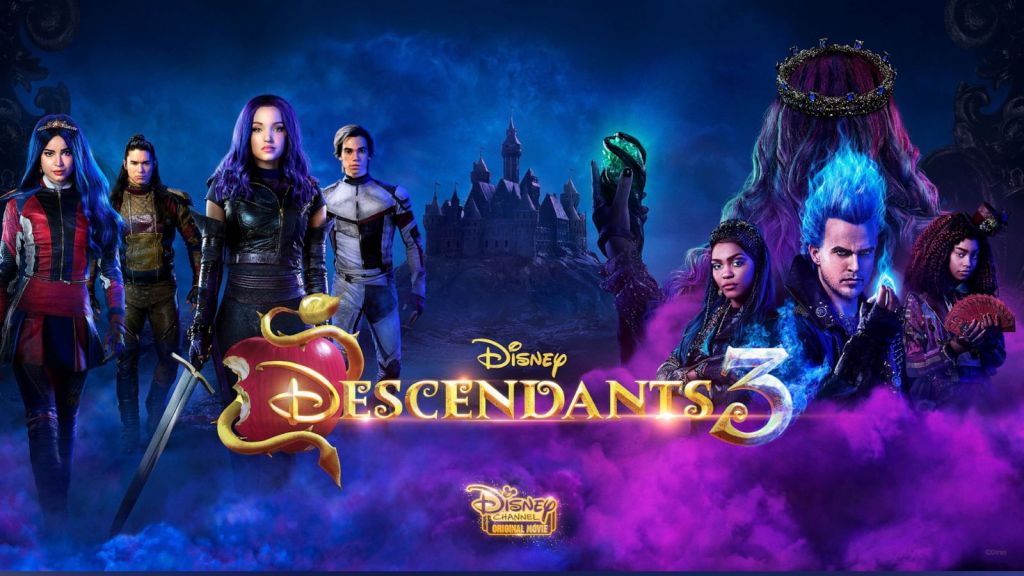
For those who aren’t familiar with the “Descendants” movies, here’s a quick summary of the first two movies. The first Descendants movie was about four kids: Mal (daughter of Maleficent), Evie (daughter of the Evil Queen), Jay (son of Jafar), and Carlos (son of Cruella DeVil) venturing to the kingdom of Auradon to enroll in school as part of the new proclamation by King Ben, the son of Belle and Adam. Meanwhile, the kids begin to question their true identities as they struggle to choose between good and evil. Trust me, it wasn’t as interesting as it sounds. Instead it was a generic teen movie filled with cheesy acting and soon-to-be-dated songs (with a few exceptions).

The plot of the second movie had a similar good versus evil dilemma plot with a side plot focusing on Uma, Ursula’s daughter and Mal’s rival. Although the movie was slightly better due to Dove Cameron and China Anne McClain’s performances, it had the same dated and childish themes as the first movie.

Personally, I thought that this movie wasn’t quite as intriguing as the second movie but not nearly as over-the-top as the first movie. In fact, it began on a relatively positive note with a heartfelt message in memory of the late Cameron Boyce and then the song “Good to Be Bad”.

Although I’m not fond of rap music, the lyrics are decent and flow well with the music. The actors also put a great deal of emotion into their performances and the dance numbers are well-choreographed. My only complaint is that the actors’ voices are heavily auto-tuned and it gets somewhat grating after a while.

Not only was the song itself decent enough, it was also a great opportunity to introduce some of the new villain kids. When I saw the trailers for the movie, I thought that the new kids were going to be the central focus of the movie or at least play a major role in the plot. Unfortunately, it seems as though the only purpose these characters served was to fulfill Ben’s original decree and to create the dilemma over whether or not to permanently close the barrier on the Isle of the Lost. Three out of the four new characters at least had a plausible explanation for their lack of purpose since they were under a sleeping spell for the majority of the movie. However, Celia (the fourth new character) was conscious throughout the movie and she still didn’t use any of her skills to aid the other characters in any way outside of one scene.

Unfortunately, the other characters weren’t much better. The movie centered so heavily on Mal that Evie, Jay, and Carlos weren’t given as much attention. There were some mildly endearing scenes between Carlos and Jane, but that was pretty much it. Because of this, it was difficult to understand who these characters really were and how they had changed since the previous two movies. The first movie included scenes which focused not only on Mal, but the other characters as well. Even though their segments only lasted a short amount of time and jumped around frequently, they still gave viewers some insight into what they learned and how they dealt with the situations they were thrown into.

Audrey, the antagonist, was the most poorly-written character in my opinion. Her character was confusing as well as underdeveloped. Her character in the first movie was similar to many other stereotypical popular girls found in many other movies and TV shows. In the second movie, she wasn’t focused on at all since her actress didn’t return for reasons unknown to me. In this movie she decided to cast a sleeping spell on the majority of the kingdom. As you can tell, this was an incredibly drastic change in her character.

Her motive was first mentioned toward the beginning of the movie. After Ben proposed to Mal, Audrey’s grandmother told her that she should have been with him. As a result, Audrey confronted Mal, saying that she doesn’t deserve Ben.

The first problem with this scene was Audrey’s grandmother. Although her cruelty and bitterness towards Mal were uncomfortable and out-of-place in the first movie, her actions were somewhat understandable. She was obviously upset about not being able to see her daughter for the first sixteen years of her life and took out her hurt feelings on Mal as a result. Nothing in her character or in her previous interactions with Audrey indicated why she would speak to her granddaughter in such a way.

The next problem was that Audrey’s jealousy toward Mal didn’t make much sense. Although she was shown to be upset when Ben broke up with her in the first movie, it only lasted a few seconds. In the following scene, she decided that she wanted to date Chad instead. Although they were revealed to be broken up in the second movie, Chad noted that Audrey broke up with him. There wasn’t any evidence in either of the previous movies explain why she would have such hard feelings.

Then, there’s her villain song…

As I’ve said before, I’m not the biggest fan of rap music. However, I believe that it can convey emotions effectively if care and effort is put in ensuring that the songs reveals something about the character or plot. In this case, it’s obvious that the songwriter only cared about making the lyrics rhyme without any regard for how clearly they express the Audrey’s motive or how well they suit the song’s tone.

This song had so much potential, but inevitably fell flat. Instead of explaining why she’s suddenly so interested in Ben, the lyrics just reiterate how upset she is over Ben’s betrayal. None of the lyrics reveal anything that hasn’t already been revealed in Audrey’s spoken dialogue. This especially problematic in a musical movie because the songs in a musical need to justify their inclusion in the movie.

Because none of the characters have coherent or developed personalities, it’s hard to understand what drives their actions. This results in the characters making decisions which seem stupid or non-nonsensical when more sensible options are available. A good example of this comes toward the end of the movie.

Without spoiling too much; the third-act misunderstanding (a trope found in many movies) comes into play toward the end of the movie. Instead of listening to what Mal has to say, all of the other characters decide to continue the quest without Mal and not one of them tries to understand her. If the movies had taken time to acknowledge that the characters’ impulsiveness was a flaw they need to overcome and didn’t paint Mal as being completely in the wrong, this scene may have stood a better chance.

The most distracting element of the movie was the drastic differences in its overall tone. The first half of the movie mostly consists of the characters cracking jokes and making supposedly hilarious one-liners. Then the second half takes a dark turn when the kids find out that most of their friends and classmates have either been put to sleep or turned to stone. Sometimes the darker and more emotional moments are interrupted by the aforementioned jokes and one-liners. Since I’m trying to avoid including any spoilers, I won’t discuss the climax in depth. I will note that it’s a blatant example of the ill-fitting dark tone.

Overall, I would describe this movie as average to below average for a made-for-TV kids’ movie. Most Disney Channel movies have a reputation for being cheesy, pandering, and dated. I thought that this movie met those criteria almost precisely. I was disappointed by how uninteresting most of the characters were and confused by the conflicting tones. Of course, these are just my personal opinions on this movie and I hope that any parents reading this will form their own opinions and encourage their kids to do the same.