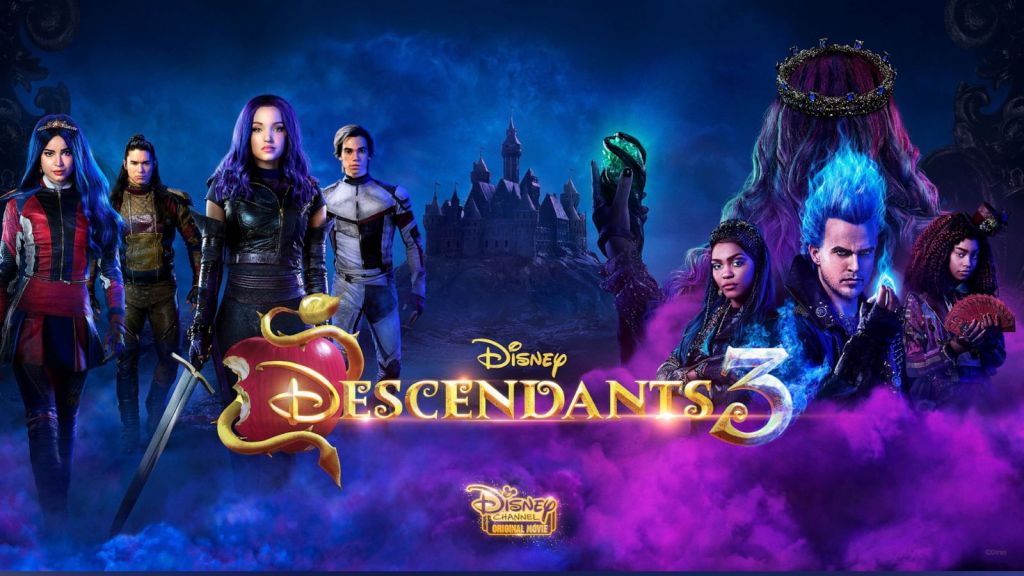
“Descendants 3” Quick Thoughts

Just so you all know, I want to do something slightly different with this blog post. Since I’m currently working on my next review, I’ve decided to publish a short post. This isn’t going to be a formal review. Rather, this is just a quick summary of my thoughts on the movie. Since it’s still fairly new, I’ll try to avoid discussing any potential spoilers.

For those who aren’t familiar with the “Descendants” movies, here’s a quick summary of the first two movies. The first Descendants movie was about four kids: Mal (daughter of Maleficent), Evie (daughter of the Evil Queen), Jay (son of Jafar), and Carlos (son of Cruella DeVil) venturing to the kingdom of Auradon to enroll in school as part of the new proclamation by King Ben, the son of Belle and Adam. Meanwhile, the kids begin to question their true identities as they struggle to choose between good and evil. Trust me, it wasn’t as interesting as it sounds. Instead it was a generic teen movie filled with cheesy acting and soon-to-be-dated songs (with a few exceptions).

The plot of the second movie had a similar good versus evil dilemma plot with a side plot focusing on Uma, Ursula’s daughter and Mal’s rival. Although the movie was slightly better due to Dove Cameron and China Anne McClain’s performances, it had the same dated and childish themes as the first movie.

Personally, I thought that this movie wasn’t quite as intriguing as the second movie but not nearly as over-the-top as the first movie. In fact, it began on a relatively positive note with a heartfelt message in memory of the late Cameron Boyce and then the song “Good to Be Bad”.

Although I’m not fond of rap music, the lyrics are decent and flow well with the music. The actors also put a great deal of emotion into their performances and the dance numbers are well-choreographed. My only complaint is that the actors’ voices are heavily auto-tuned and it gets somewhat grating after a while.

Not only was the song itself decent enough, it was also a great opportunity to introduce some of the new villain kids. When I saw the trailers for the movie, I thought that the new kids were going to be the central focus of the movie or at least play a major role in the plot. Unfortunately, it seems as though the only purpose these characters served was to fulfill Ben’s original decree and to create the dilemma over whether or not to permanently close the barrier on the Isle of the Lost. Three out of the four new characters at least had a plausible explanation for their lack of purpose since they were under a sleeping spell for the majority of the movie. However, Celia (the fourth new character) was conscious throughout the movie and she still didn’t use any of her skills to aid the other characters in any way outside of one scene.

Unfortunately, the other characters weren’t much better. The movie centered so heavily on Mal that Evie, Jay, and Carlos weren’t given as much attention. There were some mildly endearing scenes between Carlos and Jane, but that was pretty much it. Because of this, it was difficult to understand who these characters really were and how they had changed since the previous two movies. The first movie included scenes which focused not only on Mal, but the other characters as well. Even though their segments only lasted a short amount of time and jumped around frequently, they still gave viewers some insight into what they learned and how they dealt with the situations they were thrown into.

Audrey, the antagonist, was the most poorly-written character in my opinion. Her character was confusing as well as underdeveloped. Her character in the first movie was similar to many other stereotypical popular girls found in many other movies and TV shows. In the second movie, she wasn’t focused on at all since her actress didn’t return for reasons unknown to me. In this movie she decided to cast a sleeping spell on the majority of the kingdom. As you can tell, this was an incredibly drastic change in her character.

Her motive was first mentioned toward the beginning of the movie. After Ben proposed to Mal, Audrey’s grandmother told her that she should have been with him. As a result, Audrey confronted Mal, saying that she doesn’t deserve Ben.

The first problem with this scene was Audrey’s grandmother. Although her cruelty and bitterness towards Mal were uncomfortable and out-of-place in the first movie, her actions were somewhat understandable. She was obviously upset about not being able to see her daughter for the first sixteen years of her life and took out her hurt feelings on Mal as a result. Nothing in her character or in her previous interactions with Audrey indicated why she would speak to her granddaughter in such a way.

The next problem was that Audrey’s jealousy toward Mal didn’t make much sense. Although she was shown to be upset when Ben broke up with her in the first movie, it only lasted a few seconds. In the following scene, she decided that she wanted to date Chad instead. Although they were revealed to be broken up in the second movie, Chad noted that Audrey broke up with him. There wasn’t any evidence in either of the previous movies explain why she would have such hard feelings.

Then, there’s her villain song…

As I’ve said before, I’m not the biggest fan of rap music. However, I believe that it can convey emotions effectively if care and effort is put in ensuring that the songs reveals something about the character or plot. In this case, it’s obvious that the songwriter only cared about making the lyrics rhyme without any regard for how clearly they express the Audrey’s motive or how well they suit the song’s tone.

This song had so much potential, but inevitably fell flat. Instead of explaining why she’s suddenly so interested in Ben, the lyrics just reiterate how upset she is over Ben’s betrayal. None of the lyrics reveal anything that hasn’t already been revealed in Audrey’s spoken dialogue. This especially problematic in a musical movie because the songs in a musical need to justify their inclusion in the movie.

Because none of the characters have coherent or developed personalities, it’s hard to understand what drives their actions. This results in the characters making decisions which seem stupid or non-nonsensical when more sensible options are available. A good example of this comes toward the end of the movie.

Without spoiling too much; the third-act misunderstanding (a trope found in many movies) comes into play toward the end of the movie. Instead of listening to what Mal has to say, all of the other characters decide to continue the quest without Mal and not one of them tries to understand her. If the movies had taken time to acknowledge that the characters’ impulsiveness was a flaw they need to overcome and didn’t paint Mal as being completely in the wrong, this scene may have stood a better chance.

The most distracting element of the movie was the drastic differences in its overall tone. The first half of the movie mostly consists of the characters cracking jokes and making supposedly hilarious one-liners. Then the second half takes a dark turn when the kids find out that most of their friends and classmates have either been put to sleep or turned to stone. Sometimes the darker and more emotional moments are interrupted by the aforementioned jokes and one-liners. Since I’m trying to avoid including any spoilers, I won’t discuss the climax in depth. I will note that it’s a blatant example of the ill-fitting dark tone.

Overall, I would describe this movie as average to below average for a made-for-TV kids’ movie. Most Disney Channel movies have a reputation for being cheesy, pandering, and dated. I thought that this movie met those criteria almost precisely. I was disappointed by how uninteresting most of the characters were and confused by the conflicting tones. Of course, these are just my personal opinions on this movie and I hope that any parents reading this will form their own opinions and encourage their kids to do the same.
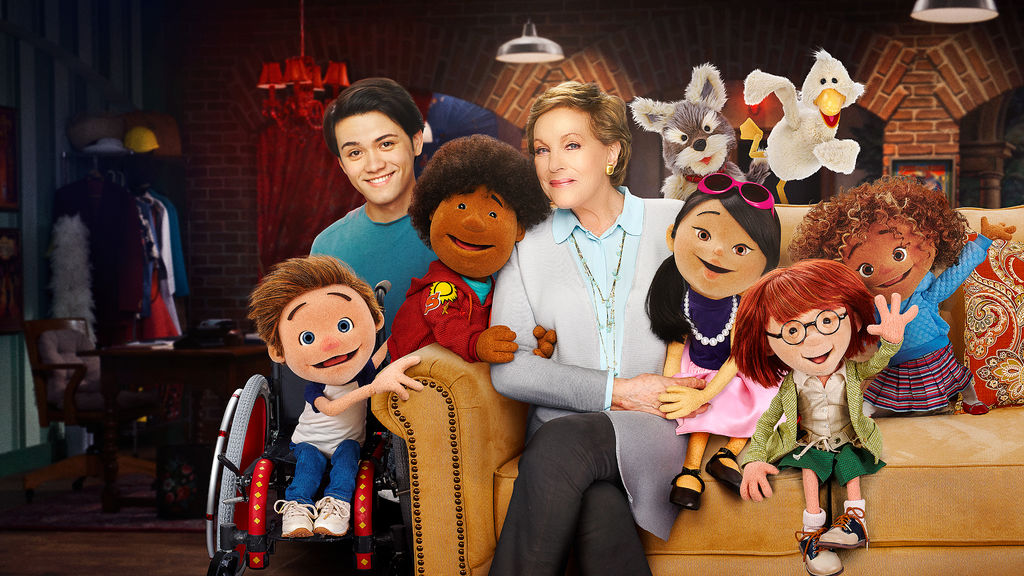
“Julie’s Greenroom” Review

It’s been several months since I last posted a review on this blog and I’m sorry about that. I haven’t had much motivation to write because of some challenges I’ve been experiencing in my personal life. I’ll try to post more reviews, but in the meantime I hope you like this one.

In my last post I reviewed The Who Was? Show, a Netflix original series for kids based on the educational book series. As you could tell, I didn’t really care for it. Although it tried to teach kids about famous historical figures in an over-the-top, comedic manner, the humor overshadowed most of the educational material. Thankfully, Netfilx has plenty of high-quality shows for kids and adults. So today I will review the episode Singin’ in the Room from the Netflix original series Julie’s Greenroom in order to provide an example of a much better educational children’s show. Now, I am aware that history and performing arts are two very different subjects. So, I will ensure to keep this in mind throughout this review.

Just like last time, let’s begin by listening to the theme song…


I absolutely love this theme song! The lyrics are cleverly written and the music is upbeat. It’s like the song is inviting the audience to join in on all of excitement.

You may or may not be able to tell this based on the title, but this show is hosted by the lovely Julie Andrews. Julie Andrews is known by many for her incredible acting and singing talents. I’m glad to say that it’s no different here. She plays her character so naturally that it seems as if she is the character instead of simply playing the character. This is can be seen when she interacts with the other characters (the Greenies as she refers to them). When she talks to them, it really seems as if she’s encouraging and nurturing real children.

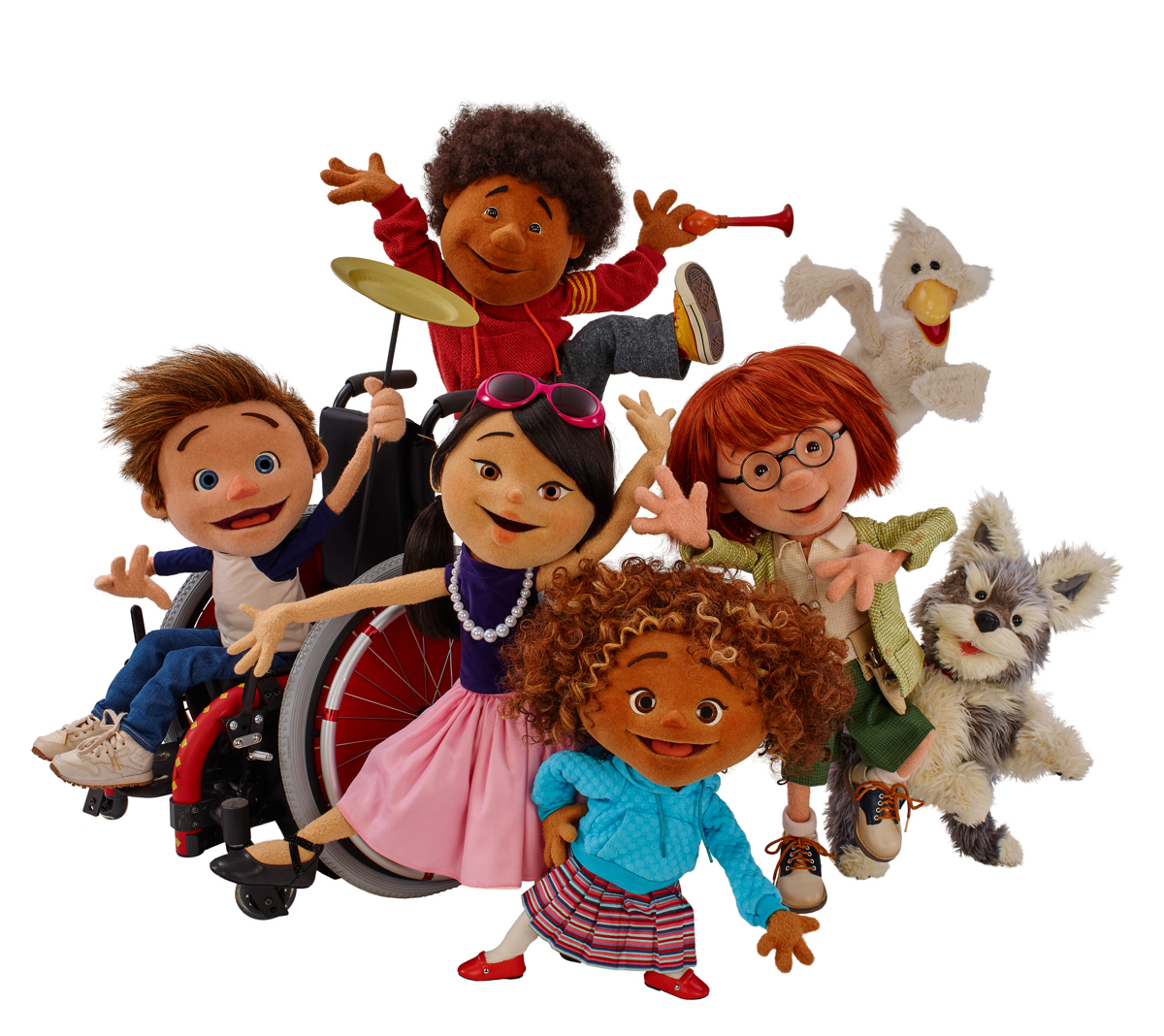
Speaking of the other characters, they’re all written fantastically! Before I get into why they all work so effectively, I believe I should address something very important. For those of you who don’t know, this show has received a fair amount of praise for its portrayal of a gender non-conforming character. However, there are some parents who are uncomfortable with allowing their children to learn about subjects like this.

This is Riley, the character I’m referring to.

Now, some of you may be wondering what my opinion on this subject. Well, I would like to try my best to avoid starting flame wars on my blog. Therefore, I won’t be stating my personal views. I will note that this topic hasn’t been blatantly addressed in any of the episodes I’ve seen. To all of the parents reading this post, I would encourage you to do your own research and make your own conclusions.

With that out of the way, I’ll return to my previous point.

Each of characters on this show has their own distinct personality. In addition to Riley; the shy yet talented genius, we have Peri, the glamorous yet loyal social butterfly; Spike, the curious writer; Hank, the enthusiastic and confident musician; and Fizz, the kindhearted newbie of the group.

The only nitpick I have (which is relatively minor) is the character designs. Although the models are charming and fun to look at, the characters’ facial expressions are extremely limited. Even in moments where the characters are supposed to be sad or angry, they still have a permanent smile fixed into their faces. This is why I believe that Jim Henson’s puppetry style isn’t meant for human designs.

I’ve seen my fair share of child characters in movies and television shows. They sometimes range from unbearable brats to saccharine Mary Sues, with a few exceptions in between. Thankfully, these characters have achieved an excellent balance of flawed and likable traits. Which leads me to the beginning of this episode.

The episode begins when Peri informs the other kids that it’s Julie’s birthday. They then form a plan to surprise their teacher with a special gift. Then, the kids head off toward the stage to begin their singing lessons. This ultimately leads to the main conflict of the episode. Although Fiz obviously wants to sing with the others, she’s reluctant to do so because of her earlier slip-ups. In this case, the conflict stems naturally from the character’s own traits. This challenges the character without changing any of the characters’ personalities or creating a forced or abrupt problem which otherwise wouldn’t fit the narrative.

The most significant aspect I’ve noticed in many educational shows is the ability to balance the educational and entertaining elements. Some focus so heavily on the educational segments that the show soon becomes monotonous. Some shows put too much emphasis on the entertaining segments and the educational material gets lost. Fortunately, this episode balances its educational and entertaining elements very well. Instead of interrupting the episode with random educational segments, the show follows seeks to achieve an overarching goal of the series or for the episode. In this case, the goal is to prepare a song for Julie’s birthday. Because of this, the educational segments fit in naturally with the rest of the plot.

In addition, the information is demonstrated by the other characters. This encourages the young audience to engage in the activities instead of simply observing the on-screen action. This can be seen in two scenes, the first being when the Greenies are learning about major key and minor key and the other being when they’re learning about the notes used to build songs. This leads me to my favorite part of the episode: the guest star.

In this show, a celebrity guest star will appear about halfway through each episode. Once they come in, they usually continue teaching the skill being taught and occasionally deliver the moral. This episode’s guest star, Josh Groban, steps in to discuss the notes used to build songs and the terms used to describe the number of people singing at once. This episode gives him the opportunity to play an active role in the episode instead of just a celebrity for the characters to idolize. His role is emphasized even further in this episode’s big musical number.

Of course Josh, being the amazingly talented singer he is, absolutely nails this song! However, it isn’t enough for a song to have a gifted singer in order to be considered good. Fortunately, this song exceeds in many other aspects. The lyrics are fun and inventive and deliver the message in an interesting and clear manner. It’s obvious that the songwriter put great care and effort into writing the song.

As you can tell, the song is encouraging the audience to use music and song to express their emotions. Most children’s shows about music and art have conveyed this message in at least one of their episodes. I suspect that there may be a particular reason why this message was selected. For those of you who don’t know, Josh Groban shared his struggles with anxiety and depression in an interview. He also revealed that he hopes to reach out to those dealing with similar problems through his song, “River”.

I’m not certain if these factors were intentionally connected to the selected moral or guest star, but it is likely. Even if this is entirely coincidental, the message is still strong. This segment shows that the writers understand that children aren’t just pawns to make a prophet off of. Despite their innocence and naiveté’, they’re still humans and this episode treats them as such by acknowledging that they sometimes have days which make them feel sad or angry. It also encourages them to express them through music and song.

Now that I’ve covered what I consider the most important part of the episode, I’ll discuss another strong educational segment. During each episode, the guest star not only delivers the moral, but also provides more information regarding the subject being taught. In this episode, Josh Groban teaches the audience about singing in harmony by encouraging the Greenies to practice singing notes used to build songs. Since the characters are learning these skills in order to sing to Ms. Julie for her birthday, the educational segments flow naturally with the plot. This keeps the flow of the episode smooth and keeps the audience engaged.

Overall, this episode does a fantastic job balancing the educational and entertaining elements. The characters are equally balanced with traits that make them endearing and realistic. The show discusses how strongly emotions can affect children in a mature and lighthearted fashion, showing the writers’ respect for their target audience. I highly recommend this to parents who might be interested in showing this to their children. Chances are, they’ll enjoy the energetic tone and gain some valuable knowledge about music and art.

“The Who Was? Show” Review

the-who-was-show-show
Disclaimer: This review will include a graphic and possibly disturbing image. However, I only included as an example of Frida Kahlo’s work and to explain why a particular segment of this episode doesn’t work.


Something that many of you may not know about me is that I love the “Who Was?” book series. If you don’t know about this series, let me briefly explain what it is. The “Who Was?” series is a collection of books for kids in grades 3-7 about influential people in the past and present. Although I didn’t read them as a kid, I appreciate them now as an adult because of their simple yet straightforward way of delivering information.

So, when I noticed that Netflix had released a series based on the books I was cautious at first. After seeing “The Magic School Bus Rides Again”, which I’ll review at some point, I was worried that the show wouldn’t be a faithful adaptation of the books. Nonetheless, I tried to remain optimistic and I convinced myself to watch a few episodes before judging the show prematurely. As it turns out, I had good reason to be nervous. Since so many people seem to enjoy this show, I’ve decided to offer my opinion. I’m going to be reviewing the episode about Susan B. Anthony and Frida Kahlo in order to explain why this show doesn’t work as an adaptation of the books or an original show.


First, let’s have a listen to the theme song…


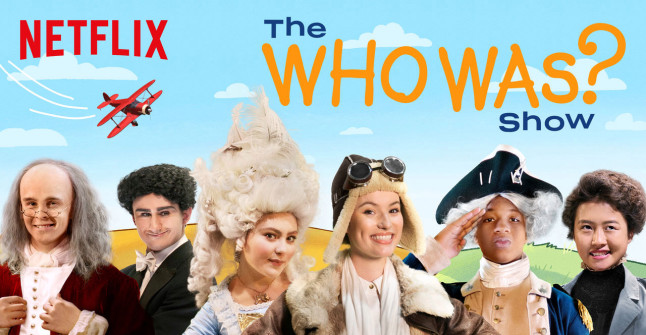
While it’s certainly not the best song in the world, it is pretty catchy and it does get the point of the show across. Besides, it’s better than most of the songs this show has to offer. The only thing I don’t like about the intro is the character designs. Most of the designs are taken directly from the book covers. The only ones that seem to have had any effort put into their designs are the ones who actually appear in this season which comes across as lazy. 

The episode begins by introducing viewers to Susan B. Anthony, who was born in the year 1820 to a poor Quaker family and who spent her life fighting for the rights of others.  During this intro sequence, she keep reiterating the fact that everyone deserves to have a say in how the government should be run and trust me, it gets annoying very fast. The kids watching this will probably understand this the first time so there’s no need to keep repeating it. Maybe this was supposed to show that she’s slightly uptight and needs to loosen up a bit. Is that really how you want to portray one of the most influential figures in the women’s suffrage movement? I’m assuming that that’s probably a joke but what exactly are viewers supposed to find funny? The fact that she’s demanding? Most people, especially kids, tend to find people who are demanding obnoxious, which isn’t a word you want to associate with an influential historical figure. Not to mention the fact that later in the episode she flat-out states that women are better than men. If she’s supposed to be advocating for equality, why is she stating that women are better than men? This isn’t even an isolated example of misrepresenting a famous historical figure for the sake of comedy. In the second episode, Joan of Arc is portrayed as a naïve, psychotic teenager rather than a courageous warrior.

Then, the episode introduces Frida Kahlo, but I’ll get to her part of the show later. For now, I’ll be focusing on Susan B. Anthony. Since I haven’t read the book about her, this will allow me to discuss how the show works, or rather doesn’t work, on its own.

Next, we’re treated to a song which I like to call “Hey! That’s Messed up!” Why? Because the phrase is used way to much! Don’t believe me, here’s what I’m talking about:


Please excuse the poor quality, this was the only footage that I could find of the song since this is a Netflix show. At this point, I should mention that Susan B. Anthony is played by Lila Crawford. She’s also played as the title character in the 2012 Broadway revival of Annie and Red Riding Hood in the 2014 Into the Woods movie. Although her voice sounds fine most of the time, it’s definitely not up to par here. I’m not sure if it’s because of the style of music or because she’s trying to sing in a voice other than her own. And I know that I already mentioned the bad character designs, but it’s even more obvious here. Instead of designing a completely different look for Susan as a baby and a child, they just slapped her head onto the bodies of both, which brings the character design right into the uncanny valley.

Then, we’re treated to a skit titled “Ye Bachelorette.” Even though I’ve been pretty hard on this show so far, I have to admit that this segment isn’t that bad.  As you can probably tell by the title, it’s a parody of The Bachelorette which satirizes 1800s gender roles. So, why do I like this better than the other segments in this show? Well, first of all I can’t stand The Bachelorette so it’s kind of fun to watch this show poke fun at it. And second, this is one of the few parts of episode that manages to be both entertaining and educational. Kids are told that women didn’t have the same rights as men, but often times the only inequalities mentioned are unequal pay and not being allowed to vote. This short also mentions that women didn’t have the right to own property or ask for a divorce. My favorite part was toward the end when Susan said “Yeah, you dudes are awful. Show cancelled, stupid premise! Rose is mine, thank you.” I wish that I had some footage to show you, but alas I couldn’t find any and I don’t have the skills to record it myself.

That’s all that I really have to say about the segments focusing solely on Susan B. Anthony. So, as someone who hasn’t read the book about her what did I learn? She was born in the year 1820, she was a Quaker, she wore pants (which was considered shocking at the time), and…that’s it. What I’m trying to say is that this show focuses so heavily on the comedy that the facts tend to get lost in the grand scheme of things. While kids may find this show entertaining, they’re going to be left with more questions than answers.

Now that I have that out of the way, let me turn your attention to Frida Kahlo. That way, I can show you how this show fails as an adaptation of the books. Before I do so, I would like to point out one thing that the show does right with Frida’s part of the show. For the most part, I really like the way Frida is portrayed throughout the episode. She has moments where she’s sad and lonely but she channels those feelings into her art. She’s also shown to have a sense of humor and she was known for her mischievous spirit especially as a teenager. Unfortunately, that’s the only positive aspect of her section.

After introducing viewers to Frida Kahlo, the show then takes us to her bedroom where she’s recovering from the horrible injuries she received after being in a bus accident.  The episode wastes no time with its desperate attempts at humor by showing how incompetent her doctor is. That would be funny if they weren’t talking about a real victim in a real and horrifying accident. Also, the amount of pain that the actress shows comes across as too relatable to be funny. Even though most people haven’t been in as bad of an accident as Frida, they’ve probably suffered a really painful injury at some point in their lives.  Since they can relate to the pain that Frida is in, it comes across as cringe-worthy rather than funny. Not helping is this “joke”:

Doctor: “Hey, I brought you something to cheer you up.”

Frida: “Flowers?”

Doctor: “Better! It’s a piece of the bus that got stuck in you.”

In case anyone is wondering, that actually happened. The book even states that “The metal arm from one of the bus seats had gone through Frida’s body.” (Fabiny, Sarah. Who Was Frida Kahlo? p.25) Perhaps it’s because I’m personally not a fan of black comedy, but I found this segment more disturbing and uncomfortable than funny.  On top of that, they don’t even mention that the injuries caused by the accident left her unable to have children. At first, I was willing to forgive the writers for this due to their desire to remain tasteful. As you’ll see later, that idea soon went completely out the window.

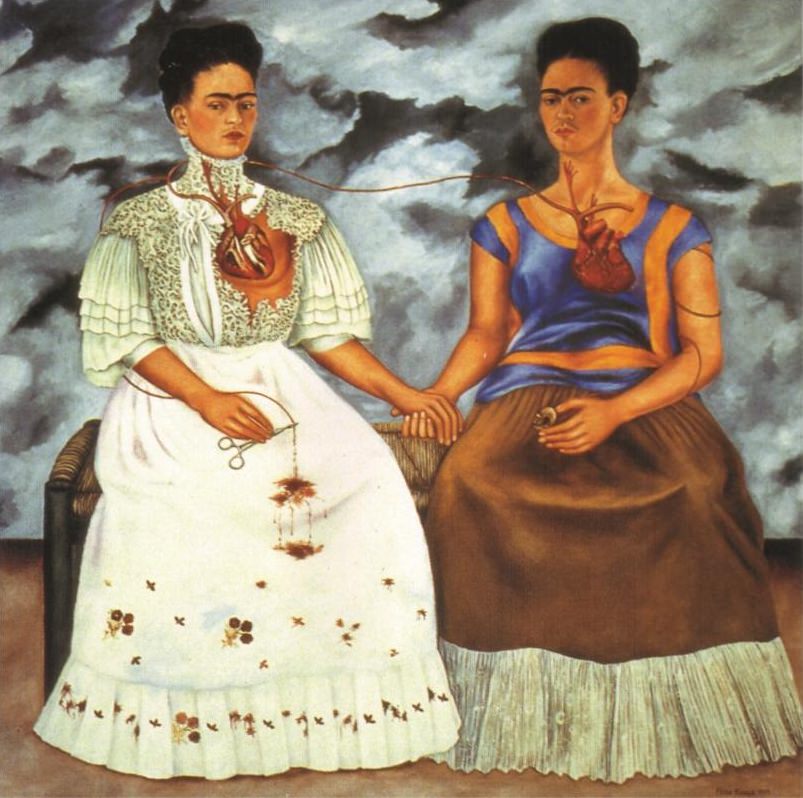
Next, we’re treated to “Frida’s Joy of Painting” which showcases some of Frida Kahlo’s art in the style of a YouTube video. It actually isn’t too bad the first time around, aside from the uni brow joke. Even then, it’s rather subtle and it’s the only one out of the endless amount they could have added. The second time however, it’s much worse. This time, it opens up with Frida stating that she hasn’t been painting lately because she’s been taking care of her husband, Diego Rivera, who has been painting murals in America. Then, Diego comes in asking for his socks and Frida decides that she’s had enough and wants to leave him. This inspires her to paint what she says is one of her most emotional paintings obviously based on Las Dos Fridas (The Two Fridas in English.)


the-two-fridas

She states that the one part of the painting is who she was before, bright and colorful and full of life, while the other one is who she became when she found out her husband kissed her sister and many other women.


Oh boy, where do I begin? First of all, this is a painful over-simplification of the relationship between Frida and Diego. It’s true that Diego had many affairs during their marriage but the way it’s portrayed in the episode makes it seem like Frida was the victim in the entire situation. In reality, she was also unfaithful. The book even makes note of the tension between the both of them until “Frida decided that the only way she could still work and stay friends with Diego was to move into her parents’ home, the Blue House.” (Fabiny, Sarah. Who Was Frida Kahlo? p.85) The kids that this show is aimed at are too young to understand the complicated circumstances which lead to infidelity in marriage and even most adults don’t fully understand it. Which is why Sarah Fabiny (the author of the book) wisely chose not to mention it and the writers of this episode should have done the same since they’re clearly unable to depict it in an honest and respectful way. I’m also confused why they believe that this is an appropriate subject to cover with children yet they don’t think they can handle the fact that Frida couldn’t have a baby because of her injuries.  If the writers were trying to be tasteful earlier, they lost all taste here. 

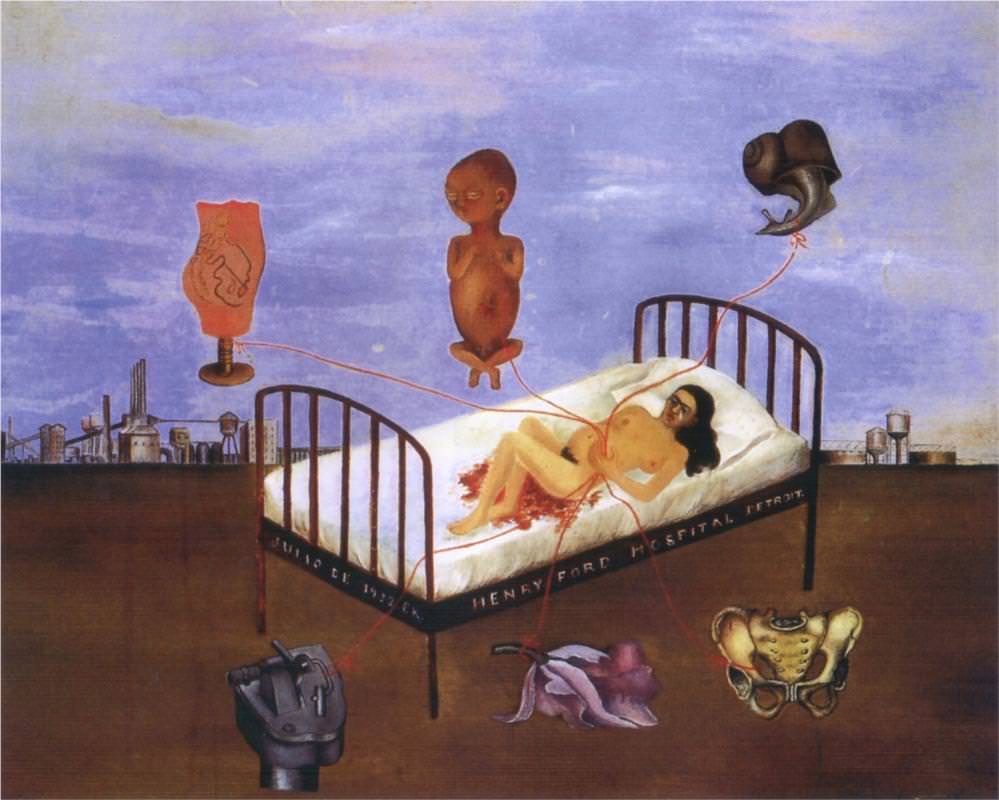
Sadly, that’s not the end of the stupidity. The next skit opens up with the narrator saying that Frida Kahlo was once brought to one of her gallery openings in her bed. She then proceeds to drive her bed around like it’s a race car and even takes it for a ride on a roller coaster. I really, really wish that I was kidding you! I have no idea what the writers were going for with that segment. My first guess was that it was a reference to Frida Kahlo’s painting Henry Ford Hospital (The Flying Bed). For those not familiar with her work, this is what it looks like:

henry-ford-hospital

This is obviously something that you wouldn’t want to show to kids, so I highly doubt that any kid watching this show would understand the reference. Although the adults might understand the reference, they probably won’t find it very funny. The next thought I had was that they were trying to make the fact seem more interesting to the kids. In that case, they could have just told the viewers what really happened. Trust me, it’s much cooler and make much more sense.

After all of that ranting, I would like to give this episode one last bit of credit. Although I would hardly call it one of my favorite songs of all time, this one is pretty decent.


Although the lyrics leave much to be desired, the music is pretty good. Seeing Frida and Susan holding signs pressing for equality is a simple yet effective representation of the song’s overall message of persisting through difficulties and standing up for your beliefs. It’s not award-worthy but it’s a nice change from the last song I heard.

As you can tell, I’m not a fan of this show. The humor is juvenile and dated at times, the characters are oversimplified and cartoony, and the information is delivered in a very sloppy manner. If you want your kids to learn about some of these important historical figures, I recommend that you stick with the books.


Information Sources:

Fabiny, Sarah Who Was Frida Kahlo?

http://www.pbs.org/weta/fridakahlo/life/people.html


Image/Video Sources:

https://decider.com/show/the-who-was-show/

https://www.fridakahlo.org/henry-ford-hospital.jsp

The Two Fridas – Las dos Fridas – Art Prints

http://www.youtube.com/watch?v=VpfIgbvSkWE

http://www.youtube.com/watch?v=uUV7Qf3Dc3k

http://www.youtube.com/watch?v=XZxzJGgox_E

http://www.youtube.com/watch?v=8bYEziFji9o