
I know that it’s been quite a while since I’ve made a new post. I was quite distracted with my job as a teacher’s assistant during the schoolyear. On top of that, I’ve been having trouble coping with my anxiety over the past few months. Thankfully, I’ve found some solace in my Catholic faith.
Since we’ve recently left the Easter season, I’ve decided to share my thoughts on a Christian book in a series aimed at young girls. I would first like to preface this by stating that this is not a criticism on the religion itself. As stated previously, I myself am a practicing Roman Catholic. My intent is to discuss the writing and the message.
As always, I believe it is necessary to offer some background on this book. “Ruth: The Belle of Loyalty” is the fourth book in the series “The Adventures of Rooney Cruz” also known as “Bible Belles.” The series started when a young couple discovered there was a lack of high-quality books with strong female characters. This became especially important to them when they realized they were going to be parents themselves. And thus, Bible Belles was born.
I will admit that I haven’t actually purchased any copies of the books. However, I have found footage of people reading them on YouTube. From what I’ve seen, the books range in quality from decent to good. I wouldn’t say they’re on the same level as such classics written by Dr. Seuss or Beatrix Potter, but they clearly aren’t trying to be. The aim of these books is to provide Christian girls with strong female role models and instill them with important morals, which is something I can respect.
However, even good series have the occasional dud. In this case, it’s “Ruth: The Belle of Loyalty.” This post will explain where exactly this book went wrong and how it could have been improved.
The book starts off well enough. As the text implies, Rooney’s friend Dani is devastated over her parents’ divorce. Rooney tries to comfort her friend, but to no avail. So, she decides to turn to God for help through prayer. I will applaud Erin Weidmann for maintaining consistency with the first book in the series. I’ve seen too many pieces of children’s media that have characters repeat lessons they should have learned earlier in the series or include dialogue and plot points that contradict earlier episodes.
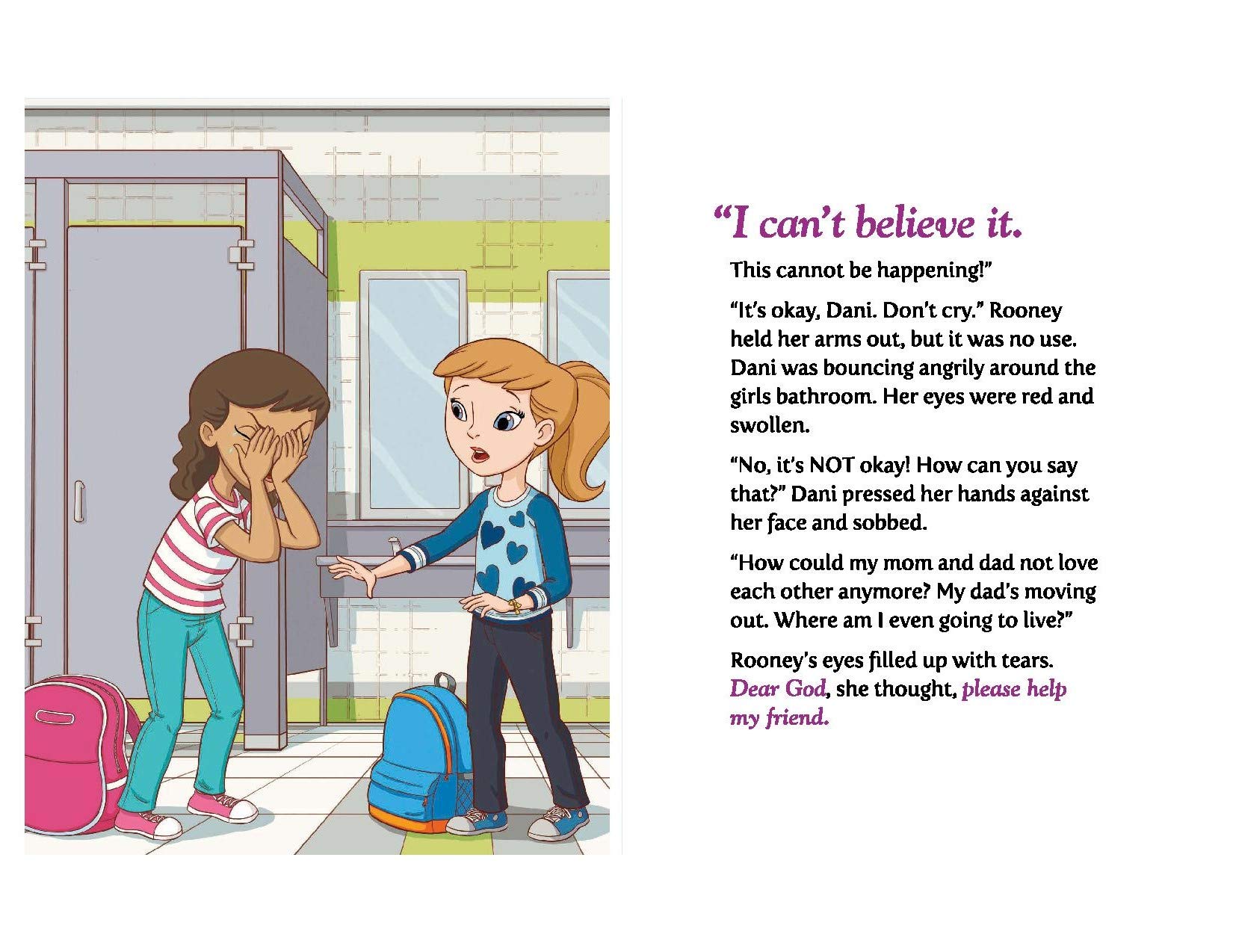
Things start to go bad for our protagonist when her friend rudely brushes off her attempts to console her. The book tries to paint this as a misunderstanding between friends. However, it is necessary to point out that Rooney simply suggested that they pray about this problem. Dani interrupted her before she had a chance to explain herself. Yet the story treats Rooney like she’s the one who needs to learn a lesson.
To add insult to injury, Dani decides to abandon her friend and instead opts for the company of Kylie and Maddie. These two girls were introduced in the first book as the one-dimensional mean girls found in nearly every piece of media aimed at girls. They were clearly shown to be quite cruel to Rooney since they not only teased her relentlessly about her clothes, but they even threw rocks at her.
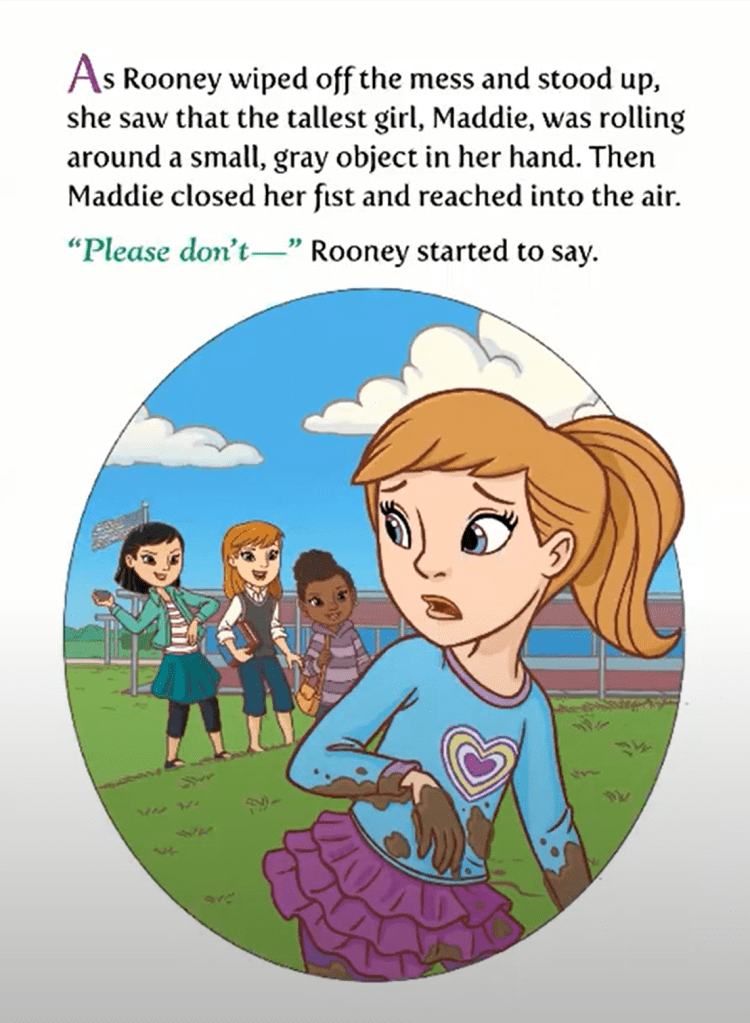
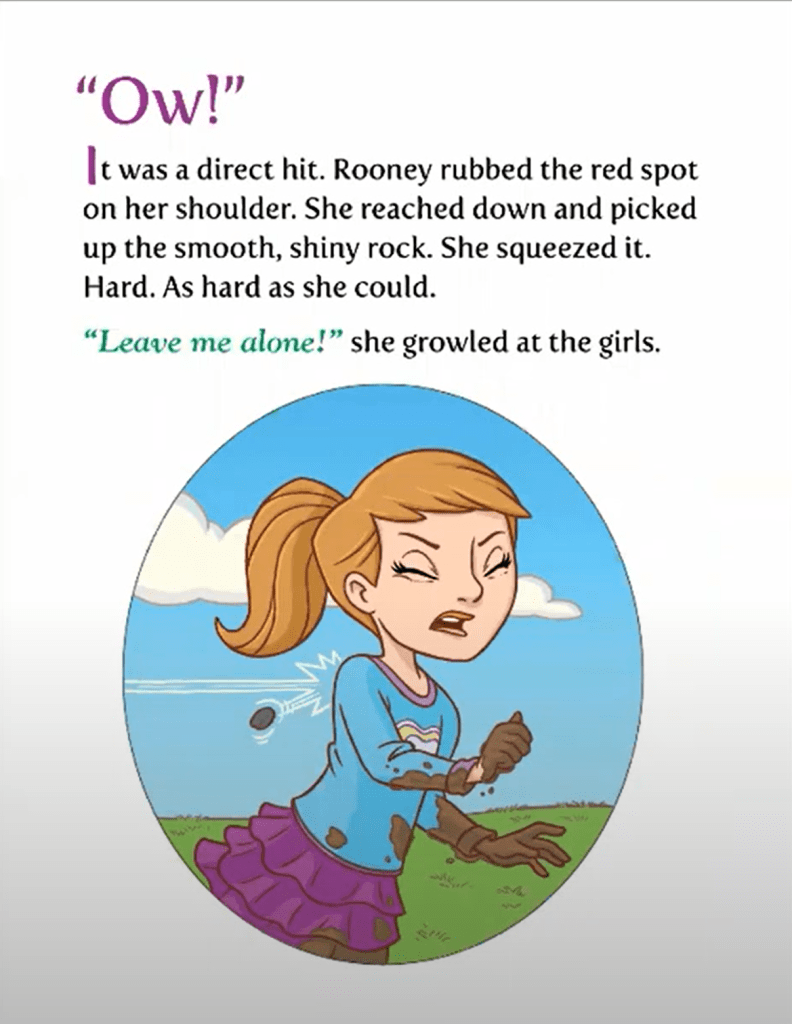
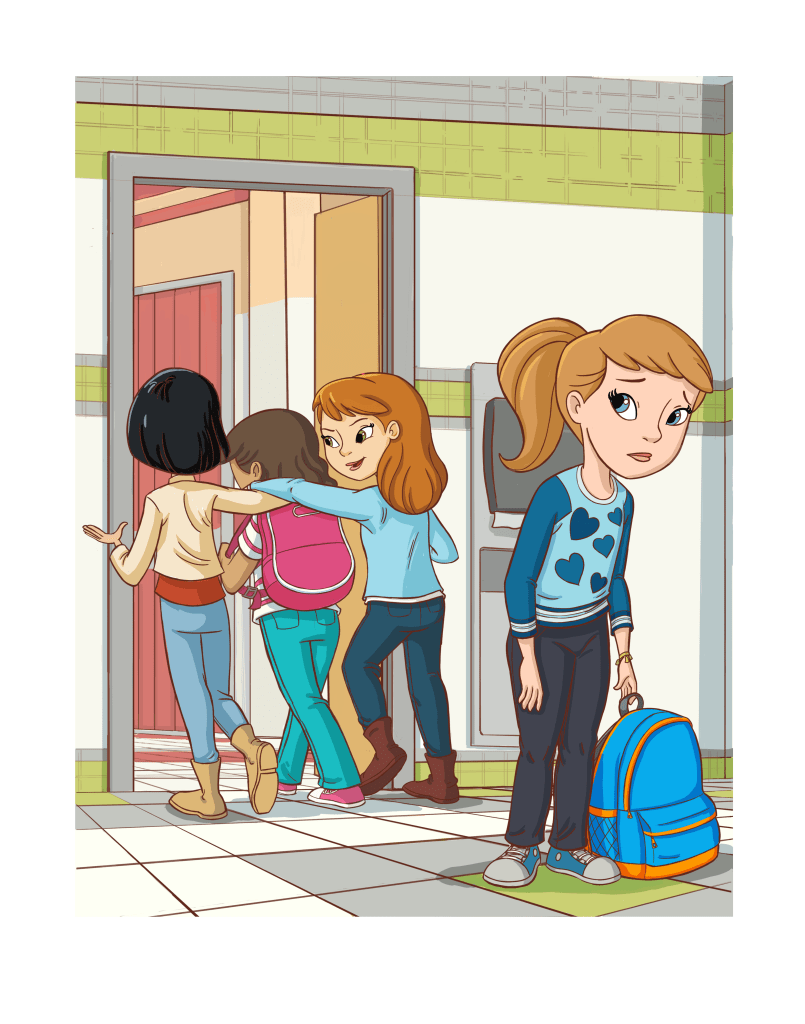
I can understand Dani being upset about her parents divorcing. No child deserves to go through that kind of pain. But going through a hard time does not give someone a free pass to treat others badly. Also, there’s a fine line between taking your hurt feelings out on the closest person to you in the heat of the moment and being a toxic friend. Dani crossed that line when she ditched Rooney for the two girls who bullied her. At this point, it’s impossible to have any sort of sympathy or understanding towards her which readers are clearly supposed to have in order for the message to work.
Shortly thereafter, Rooney’s little guardian angel, Mari, appears to tell her that Dani needs a true friend in her time of need. For someone who’s supposed to be an angel, she seems to have a twisted view of what friendship is supposed to be.
To further emphasize this point, Mari takes Rooney on a trip through Ruth’s story. Anyone’s who’s familiar with the book of Ruth will likely understand what happens next. For those who aren’t, I’ll offer you a quick summary. A woman named Naomi was once married to a man named Elimelek when they left their home in Bethlehem with their sons due to famine.

Unfortunately, Naomi’s husband and sons died some years later, leaving her with only Ruth and Orpah. Naomi then decides to return to Bethlehem with Orpah and Ruth for company. When she tells them to return home, Ruth chooses to stay behind and care for her despite her objections.
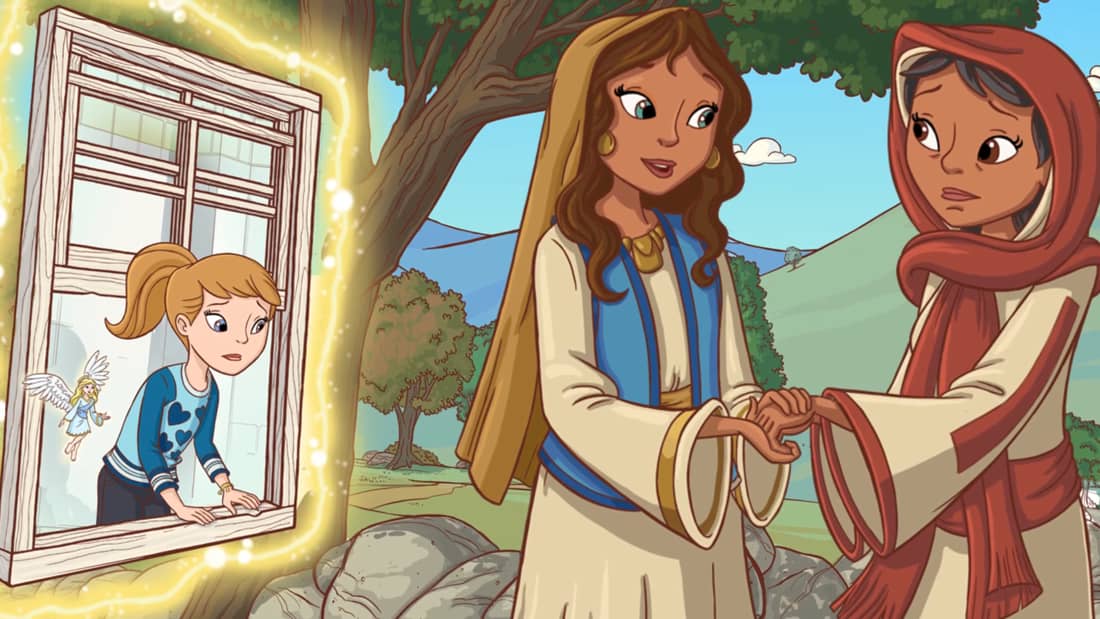
If you look closely, you’ll notice that some of Naomi’s dialogue mirrors what Dani said earlier in the book. So, it’s clear that the story is trying to compare Rooney’s dilemma to Ruth’s. However, there is a clear difference between the two. Naomi told Ruth and Orpah to go home because she felt she was a burden on them. In contrast, Dani clearly wanted to be left alone and flat-out told Rooney that her attempts weren’t helping. Kids need to learn that you can’t always fix someone’s problems and sometimes the best thing you can do is leave them alone.
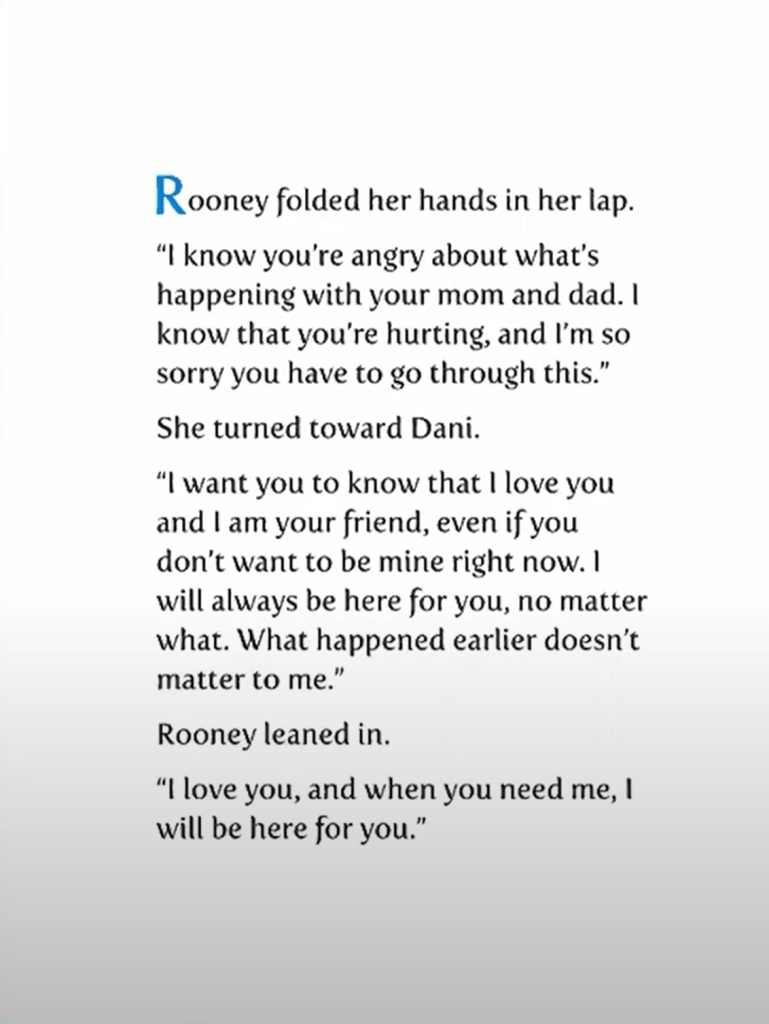
At the end of her journey, Rooney returns to school and sits down to have a talk with Dani, where she flat-out states that what happened earlier doesn’t matter to her. This seems to imply that young girls shouldn’t feel hurt by their friends words or actions and instead should enable their poor treatment for the sake of loyalty. I’m sure this wasn’t what Weidmann intended to say, but it’s apparent that no one on the creative team thought through their implications. Yes, it is important to teach girls to be loyal to their friends and family. However, we should also be teaching them that they have a right to distance themselves from people who bring them down and treat them badly. If they are taught that this kind of behavior should be tolerated from their friends, they will most likely learn to enable abuse in future relationships.
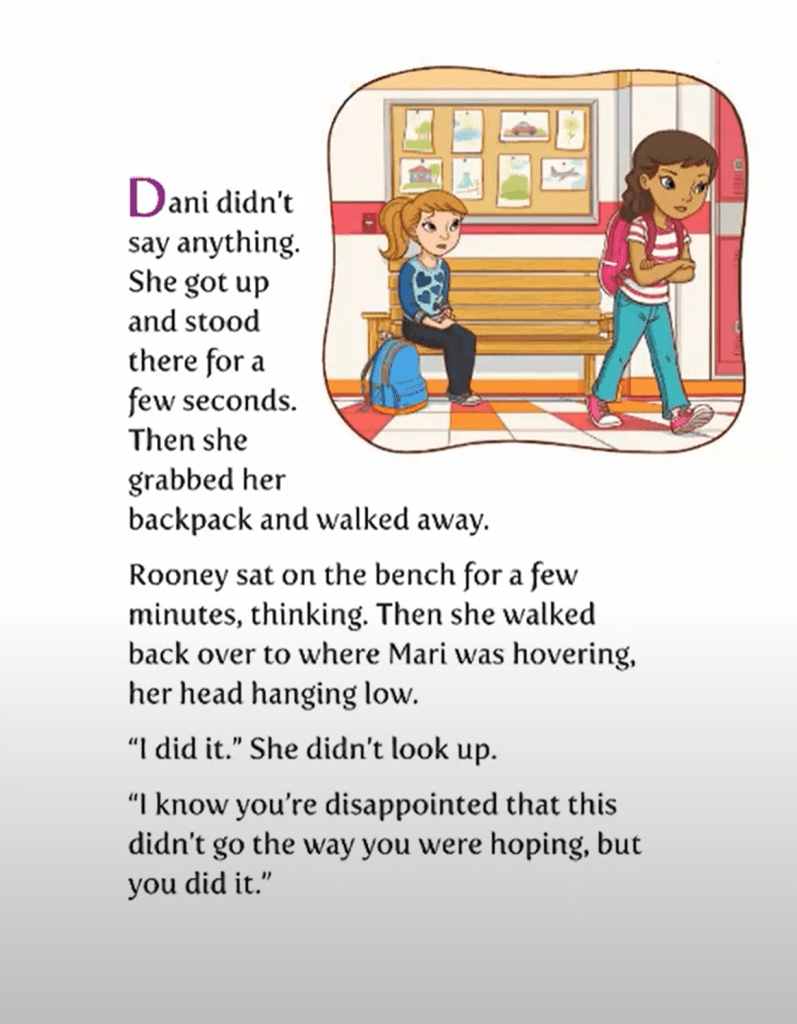
The book ends with Dani walking off and giving Rooney the cold shoulder. Rooney earns the Bell of Loyalty for putting the needs of others ahead of her own. Finally, Mari reminds her that even though she didn’t get her “happily ever after,” God has a special plan for her.
Honestly, this ending gives me mixed feelings.
On one hand, I kind of appreciate that the author was willing to teach the young readers a difficult lesson and still give the story somewhat of a happy ending. Sometimes you don’t get a happy ending even if you’re a good friend. That’s a hard lesson to swallow, but it is one that kids are eventually going to learn at some point in their lives.
On the other hand, it emphasizes the confused writing. The story continually frames Rooney as the one who needs to learn a lesson when, in actuality, Dani is the one who snapped at Rooney and abandoned her for the mean girls.
Overall, “Ruth: The Belle of Loyalty” was an earnest attempt at teaching girls a lesson in loyalty. However, the writing confuses loyalty with enabling which is likely to confuse younger readers, which is why I can’t recommend this book. If you want a story about loyalty done right, check out the Veggietales episode, “Asparagus of La Mancha,” which communicates the message with clever writing and likable characters. Unfortunately, it is necessary to read this book in order to understand the final book in the series. So, I suggest parents use this as an opportunity to teach young girls about being a good friend while setting healthy boundaries.
 Life with Anne